Blog
Dental hygiene tips for healthy teeth & gums
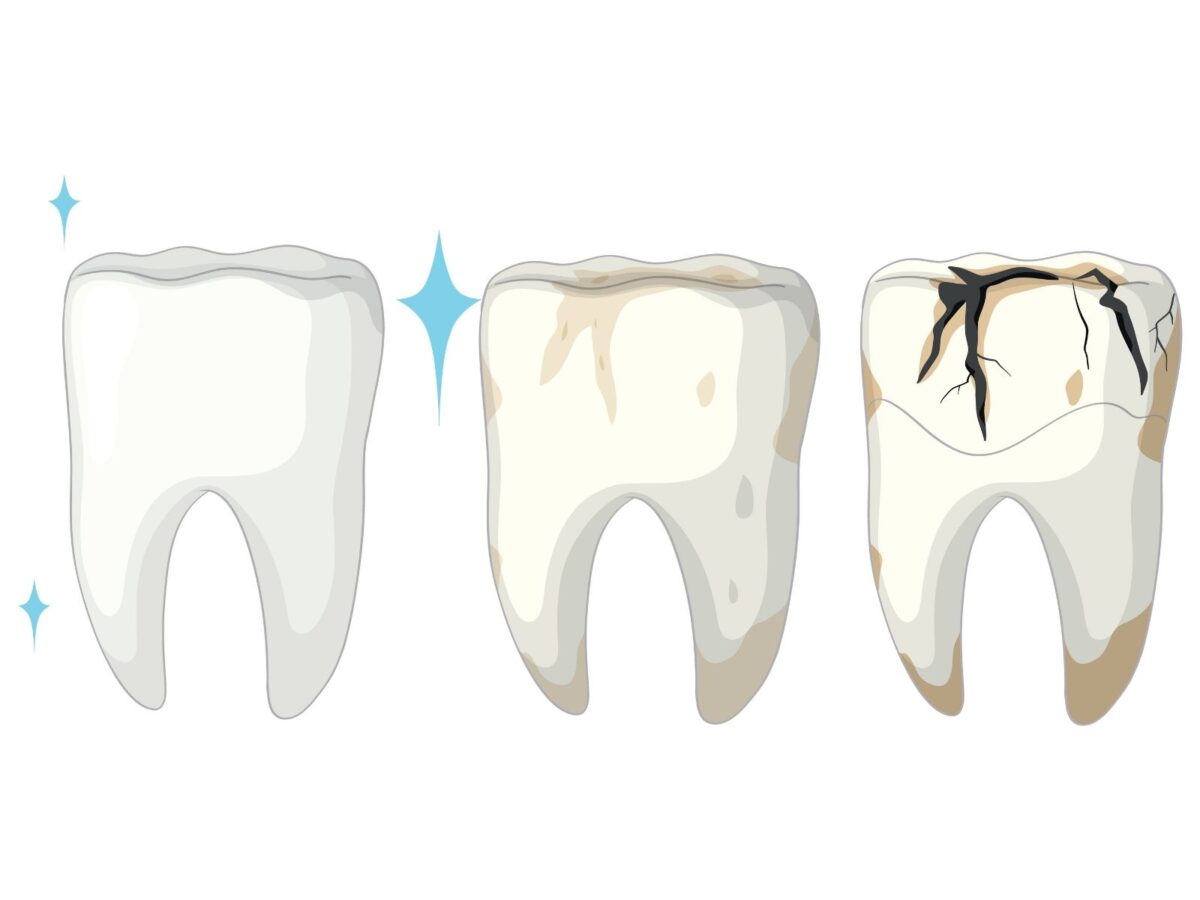
Black Dot On Tooth: What It Means and How It’s Treated
It’s usually something you notice without really trying. You’re brushing, or just looking in the mirror for no reason, and then something feels a little off. Not in a big way. Just enough that your eyes go back to it again. It’s a small dark mark, nothing painful, nothing that feels different, but it stays there when you look twice, and that’s what makes you pause.
A black dot on a tooth doesn’t really give you a straight answer. It feels a bit off, but not enough to make it feel like a problem, so it sort of sits there without you doing much about it.
Most people don’t actually know what it means, and it can come down to more than one thing rather than just a single cause.
What A Black Dot On A Tooth Usually Points To
The first instinct is usually to think cavity. That’s what most people jump to. A dark spot equals decay. It sounds logical, and sometimes it’s right. But not always.
Teeth might look smooth at first, but they’re not really like that, especially toward the back. There are little lines and dips where things can collect. Food can collect there, stains too, and even plaque can stay behind more than you’d expect. With time, those areas may begin to look darker compared to the rest.
So some black spots on teeth are just stains sitting in places that are harder to clean. They don’t go deep and don’t damage the tooth structure. But then again, some do. That’s where it becomes less obvious.
Why A Dark Spot On A Tooth Doesn’t Always Mean Decay
Color alone is misleading. A tooth can look darker in one area without actually being damaged underneath. And the opposite can also happen. Something might look light on the surface, but already be developing into a cavity below.
Dentists don’t rely on color for that reason. They check how the spot feels. Whether it’s smooth or slightly soft. Whether it catches when a tool runs over it. Small details like that matter more than the shade itself.
So when someone notices a dark spot on a tooth, that’s really just where it starts. Not the answer.
How Common Tooth Decay Actually Is (And Why That Matters Here)
Tooth decay is actually pretty common. It’s just not something you really think about much. It’s not just something kids deal with. Adults do too, quite often. The CDC has said that around 90% of adults have had cavities at some point. And a lot of people still have decay that hasn’t been treated.
So when you notice a black dot on a tooth, it’s hard to just ignore that thought. It could be nothing. But it could also be early decay. And that’s usually why people get it checked.
What Causes Black Spots On Teeth In The First Place
There isn’t just one cause, and that’s where people get confused. Staining is probably the simplest explanation. Coffee, tea, and certain foods—over time, they leave behind pigment. Especially in those tiny grooves where brushing doesn’t always reach perfectly.
Then there’s tartar. Sometimes plaque just builds up and stays longer than you think. After a while, it hardens. When it does, the color can change a bit, yellow, brown, or even darker in some areas. Brushing won’t really take it off then, so it just kind of sits there until it’s cleaned.
And then there’s decay. That tends to develop more gradually. It doesn’t show up overnight. A small dark mark might be one of the earlier visible signs, especially if it’s paired with a slight change in texture.
So black spots on teeth can look similar, but come from completely different things.
When A Black Dot Actually Needs Treatment
If it’s just a stain, treatment is simple. A cleaning, maybe polishing, and it’s gone. Sometimes it takes very little effort. If it’s tartar, it needs to be removed professionally. But if it’s decay, that’s different.
Sometimes it’s just a small cavity. A simple filling usually takes care of it. Nothing serious at that stage, but it’s better not to leave it. Once it starts spreading, it doesn’t really stay small. That’s the part people underestimate.
A black dot on a tooth can stay unchanged for a while. But if it’s decay, it slowly moves deeper. You may not feel anything at first. Then suddenly there’s sensitivity. Then pain. So the timing matters more than the size.
Why Ignoring It Can Be A Problem (Even If It Doesn’t Hurt)
Pain is not always the first sign. That’s something people realize a bit late sometimes. A tooth can look slightly off and feel completely fine. No discomfort, no sensitivity. Nothing that tells you that something is wrong.
But underneath, things can still be changing. Cavities often start quietly. The outer layer breaks down first, slowly. Pain usually comes in later, and by then the problem is often deeper than it started. That’s why dentists don’t wait around for it. If something looks different, even slightly, they’ll check it properly.
What Dentists Actually Do When You Come In With This
It’s not complicated. But it’s not just a quick look either. The dentist will check the spot first. Sometimes they lightly test it. Just to see. If it still isn’t clear, they might suggest an X-ray. That part usually helps more than expected. It shows what you can’t see. After that, things make sense. If it’s nothing serious, they’ll say it straight. If it needs treatment, they’ll explain it in simple terms. No guessing left. Trying to figure it out yourself, just by looking in the mirror, doesn’t really work. It mostly just leaves you unsure and overthinking it.
What You Might Notice Along With A Dark Spot
Sometimes there are small signs that go with it. A slight sensitivity to cold. Maybe something sweet feels sharper than usual. Or the surface feels a bit rough when your tongue passes over it. Other times, nothing at all. And that’s what makes it easy to ignore.
A black dot on a tooth doesn’t always come with clear signals. It can just sit there quietly, which is why people delay getting it checked.
FAQs
Does a black dot mean decay?
Not always. It could just be a stain sitting there. But sometimes it is the beginning of a cavity, and honestly, they can look almost the same early on.
Do these spots go away by themselves?
Sometimes lighter ones do fade a little. In most cases, they just stay the way they are unless you get them treated.
How serious is it, usually?
There isn’t one answer. Some are harmless, some are not. It really depends on what’s behind it.
Is it worth checking even if it’s tiny?
Yes, usually. It doesn’t take long, and at least you’re not left guessing about it.
Conclusion
A black dot on a tooth can mean different things, and that is where it gets a little confusing. Sometimes it is just a stain that has settled in over time. Other times, it is the very early stage of decay. The problem is, they can look almost the same in the beginning, so it is not always easy to tell what you are dealing with just by looking at it closely.
When people see black spots on teeth or a small dark spot on a tooth, they usually wait. Not on purpose, it just happens. Because it feels completely normal, it doesn’t seem like something that needs immediate attention.
But getting it checked once clears that doubt. You know what it is, and you are not left thinking about it again and again.